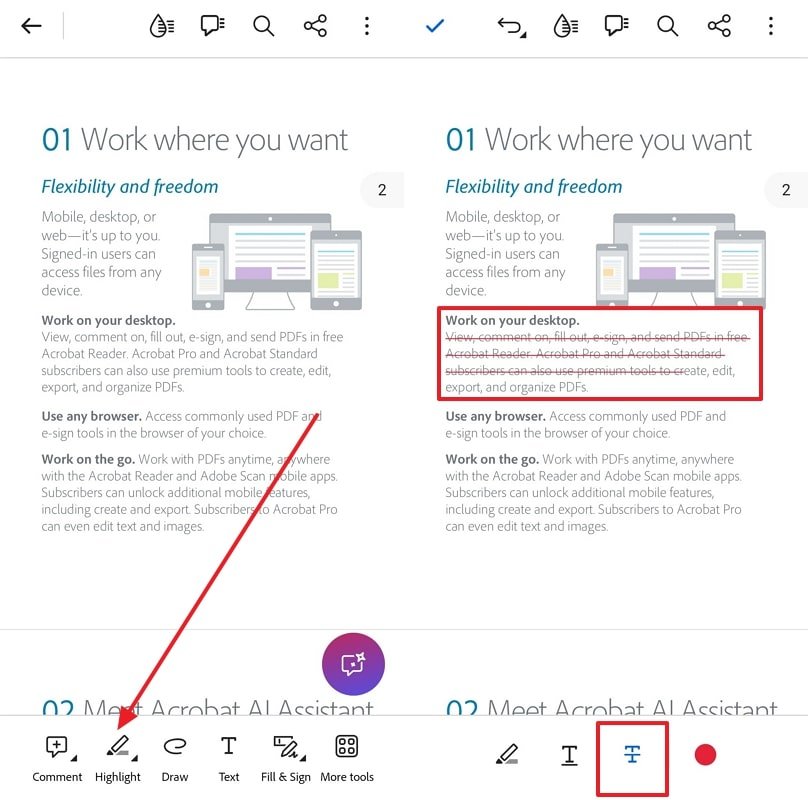
The humble strikethrough, that seemingly simple line running through text, is far more than just a formatting option. In the vast landscape of digital communication, The Psychology and Etiquette of Strikethrough Text shapes how we convey meaning, nuance, and even humor. It’s a silent, subtle, yet powerful signal that has profoundly influenced everything from professional documents to viral social media posts. Understanding its nuances is key to communicating clearly and effectively in our increasingly digital world.
At a Glance: Why Strikethrough Matters
- Transparency: Clearly shows edits, changes, or retracted statements without deleting context.
- Humor & Irony: A powerful tool for conveying sarcasm, self-correction, or playful commentary.
- Visual Cues: Instantly signals "no longer valid" or "completed" in user interfaces.
- Versatility: Useful in collaborative documents, social media, e-commerce, and task management.
- Accessibility Concern: Not always screen-reader friendly; requires thoughtful implementation.
- Not Universal: Its display can vary across platforms, leading to potential formatting issues.
The Strikethrough Decoded: More Than Just a Line
Think of strikethrough text as a digital whisper, a non-verbal cue in a text-dominant world. It’s an instruction, an aside, a moment of self-editing caught in real-time. Unlike simply deleting text, which erases history, strikethrough preserves the past while indicating a change in the present. This dual function gives it a unique place in our communication toolkit, reflecting the very nature of evolving digital communication trends.
It's a way to say, "This was the case, but now it's not," or "This is what I meant to say, but here's what I really think." The distinction is subtle but profound, allowing for layers of meaning that plain text often misses.
Mastering the Mark: How to Create Strikethrough Text
Before we delve into the deeper implications, let's cover the practicalities. Getting that line through your text is generally straightforward, but the method often depends on where you're typing.
Instant Gratification: Online Strikethrough Generators
For quick, hassle-free strikethrough, especially on platforms that don't offer native support, online generators are your best friend. These web tools take your regular text and instantly convert it into strikethrough characters that you can copy and paste anywhere.
How it works:
- Head to a search engine and type "strikethrough text generator" or, even better, use Our strike through text generator.
- Enter or paste your desired text into the generator's input box.
- The tool will output the strikethrough version.
- Copy this formatted text.
- Paste it into your document, email, or social media post.
This method uses Unicode characters, which are broadly supported across most modern platforms, giving you a universal solution for bypassing app limitations.
Built-in Brilliance: Using Native Formatting Options
Many popular applications and word processors have strikethrough built directly into their formatting menus. This is often the most reliable method when working within a specific ecosystem.
- Microsoft Word:
- Highlight the text you want to strike through.
- Go to the "Home" tab on the ribbon.
- Click the strikethrough icon, which typically looks like "abc" with a line through it.
- Google Docs:
- Select your text.
- Navigate to "Format" in the menu bar.
- Choose "Text," then click "Strikethrough."
- Telegram:
- Highlight the text.
- A small formatting pop-up menu will appear. Select "Strikethrough" from the options.
Shortcut Savvy: Manual Symbols in Messaging Apps
Some messaging apps offer specific symbol-based shortcuts to apply strikethrough directly within your message composition, no menu clicking required.
- WhatsApp: To apply strikethrough, place a tilde
~on both sides of the text. For example,~this is strikethrough~will appear asthis is strikethrough. - Discord: For Discord, you'll need two tildes
~~on each side of the text. So,~~example~~becomesexample.
Important Note: Platforms like Twitter and Facebook do not natively support these manual formatting tricks for strikethrough. For these, you'll need to rely on the online generator copy-paste method.
The Universal Language: Unicode Characters
At a more technical level, strikethrough text, especially when copied from generators, often leverages Unicode. Unicode is a universal character encoding standard that includes a vast array of symbols, including those that render as a line through text. This is why generated strikethrough can "stick" across different platforms, as it's not just a formatting instruction but a different set of characters entirely. Developers might use specific Unicode entities like ̶ in code to achieve this effect.
Copy and Paste: Your Digital Bridge
Once you've created your strikethrough text, the final step is getting it where it needs to go.
- Desktop/Laptop:
- Generate or format your text.
- Highlight the text.
- Copy using
Ctrl+C(Windows) orCmd+C(Mac). - Paste using
Ctrl+V(Windows) orCmd+V(Mac) into your target application.
- Mobile Devices (Android/iOS):
- Use an online generator via your mobile browser or copy from an app that supports native formatting.
- Tap and hold on the text to select it.
- Tap "Copy" from the options that appear.
- In the target app's text field, tap and hold again, then tap "Paste."
Be aware that some older mobile apps or simpler text fields might strip away the formatting, reverting your strikethrough back to plain text. Always do a quick check after pasting.
The Psychology of the Crossed-Out Word: Why We Use It
Strikethrough isn't just a stylistic choice; it taps into fundamental aspects of human cognition and communication. It's a visual shorthand that triggers specific psychological responses, making it incredibly effective for diverse purposes.
Transparency and the Audit Trail
In professional settings, particularly collaborative documents or legal contexts, strikethrough is invaluable for its transparency. When you see text crossed out, you instantly understand that something has been changed or removed, but the original intent is still visible. This fosters trust and provides an audit trail, showing the evolution of an idea or an agreement.
Imagine reviewing a contract: The payment will be due on ~~December 31st~~ January 15th. This isn't just an edit; it's a statement about the negotiation process, clearly showing the prior deadline and the agreed-upon revision. This clarity prevents misunderstandings and makes the revision process explicit.
The Power of Play: Humor, Irony, and Self-Correction
Perhaps the most beloved application of strikethrough in casual digital conversation is its ability to inject humor, sarcasm, or self-deprecating irony. It’s the digital equivalent of an eye-roll or a whispered aside.
Consider these examples:
- "I’m so excited for this meeting…
I’d rather be sleepingready to tackle new ideas!" - "My boss just gave me a
terriblebrilliant new project." - "I completely understand your point,
even though it makes no sense."
Here, the strikethrough creates a meta-commentary. It allows you to say one thing and simultaneously retract it, revealing your true, often comedic, thoughts. This plays on our cognitive ability to hold two conflicting ideas at once, generating a humorous tension. It's a key component of modern internet language, enriching conversations and adding personality where plain text might fall flat.
Drawing Attention to Change: Highlighting Updates
Strikethrough is also a powerful visual cue for highlighting changes, particularly when comparing old information with new. This is widely used in e-commerce, where showing a previous price alongside a discounted one can influence purchasing decisions.Old Price: ~~$49.99~~New Price: $29.99
Here, the crossed-out price immediately draws the eye, emphasizing the savings and creating a sense of urgency. It leverages the cognitive recognition that "this is no longer valid, but it provides context for what is valid." This is a prime example of how strikethrough informs and persuades without explicit verbal explanation.
Visual Appeal and Creative Expression
Beyond its functional uses, strikethrough can simply add a unique aesthetic. In creative writing, memes, or graphic design, it can be used for visual flair, to break up text, or to create a distinct visual style. It's a subtle way to differentiate text and add a unique touch without resorting to more drastic formatting.
Cognitive Recognition: UI/UX Signposts
In user interface (UI) and user experience (UX) design, strikethrough is an instantly recognizable signal. It’s part of a shared mental model that tells users something is "not valid anymore," "completed," or "unavailable." This immediate visual feedback helps prevent disorientation when elements change, improving usability and clarity.
Common UI Use Cases:
- E-commerce: Discounted prices (as seen above).
- Task Managers: Crossing out completed tasks provides a satisfying sense of accomplishment and clears the visual clutter of active tasks.
- Messaging Apps: Some apps use strikethrough to indicate an edited or retracted message, preserving the conversation flow while showing the correction.
- Settings UIs: Deselected or disabled options might appear strikethrough to indicate they are inactive but still visible.
- Content Review: In document review tools, marked deletions are often represented by strikethrough, making the editing process transparent.
This cognitive recognition is a powerful tool in a designer's arsenal, contributing to intuitive and effective user experiences, aligning with core UX design principles.
The Etiquette of the Crossed-Out Word: When and How to Use It Responsibly
With great power comes great responsibility. Strikethrough, while versatile, requires thoughtful application. Its etiquette dictates not just how to use it, but when and why.
Professional Documents: Transparency Over Deletion
In professional settings, especially when collaborating or tracking changes, strikethrough is a mark of transparency. It signals, "Here is the original, and here is the change."
- Do: Use it for version control, showing edits in proposals, contracts, or shared documents. It allows stakeholders to see the evolution of a text.
- Don't: Overuse it to avoid making a clear decision. If something is truly removed and irrelevant, delete it. Strikethrough is for showing what was, not for cluttering with what might have been.
Social Media & Casual Chat: Embrace the Humor, But Know Your Audience
On social media, strikethrough thrives in the realm of humor and irony. It's a fantastic tool for adding personality and wit.
- Do: Experiment with self-deprecating humor, quick retractions, or playful sarcasm. It can make your posts more engaging and human.
- Don't: Use it for serious corrections or retractions that require absolute clarity. If you need to correct factual information, it's often better to issue a clear, unambiguous correction. Also, avoid using it in sensitive contexts where humor might be misinterpreted. What's funny to you might be offensive to others.
- Consider Tone: Is your audience likely to understand the nuance of your irony? If there’s any doubt, err on the side of clarity.
Email Communication: Proceed with Caution
Email sits somewhere between casual chat and formal documents. Using strikethrough here can be tricky.
- Do: Use it sparingly for minor, clear corrections (e.g., correcting a typo in a previous sentence in a follow-up email). It can also work for a brief, lighthearted aside in an informal email to a colleague you know well.
- Don't: Use it for critical information, official policy changes, or in formal communications with external parties or superiors unless explicitly part of a version control process. Ambiguity in email can lead to significant problems.
When to Avoid Strikethrough: Limitations and Pitfalls
Despite its advantages, strikethrough isn't a silver bullet. Understanding its limitations is crucial for effective communication.
- Not Universally Supported: Some older applications, niche platforms, or basic text fields simply don't render strikethrough correctly. It might appear as plain text, or worse, as gibberish characters if using Unicode. Always test in the target environment if in doubt.
- Potential for Formatting Issues: Copying and pasting strikethrough text between wildly different systems (e.g., a Google Doc to a legacy CRM system) can sometimes strip the formatting or introduce glitches.
- Distracting When Overused: Like any visual effect, too much strikethrough creates visual clutter. A document littered with crossed-out words quickly becomes hard to read, undermining the very clarity it aims to provide.
- Limited Customization: While some design software allows you to control the thickness, color, or style of the strikethrough line, basic generators and app-native options usually don't.
- Accessibility Concerns: This is a significant limitation. Screen readers, which assist visually impaired users, often do not announce strikethrough text. A screen reader might read "Old Price: 49.99 New Price: 29.99" without conveying that 49.99 is no longer valid. This makes it crucial to combine strikethrough with semantic cues, aligning with inclusive accessibility best practices.
Best Practices for Impact: Designing with Strikethrough
For UI/UX designers, content creators, and anyone serious about digital communication, using strikethrough effectively means adhering to certain best practices.
- Subtlety is Key: The line should be noticeable but not overpowering. A thin, appropriately weighted line ensures readability and prevents it from dominating the text.
- Complementary Cues: Especially in UI, don't rely solely on strikethrough. Pair it with other visual signals like reduced opacity, a lighter color, or even a smaller font size to reinforce the "inactive" or "completed" message. For example, a completed task might be strikethrough and greyed out.
- Prioritize Accessibility: This cannot be stressed enough. Always combine strikethrough with semantic cues. For instance, if you're marking a task as complete:
- Instead of just
~~Buy milk~~, consider~~Buy milk~~ (Completed). - For screen readers, use
aria-labelattributes in web development to explicitly state the status (e.g.,<span style="text-decoration: line-through;" aria-label="Task completed: Buy milk">Buy milk</span>). - Consistency Across Your Design System: Define what strikethrough means within your product or brand guidelines. Is it for deleted items? Completed tasks? Discounted prices? Stick to that definition uniformly to avoid confusing users.
- Typography Testing: Different fonts and screen sizes (especially mobile) can affect how a strikethrough line appears. Test your implementation to ensure the line thickness and vertical alignment remain clear and don't obscure the text itself.
Beyond the Line: Alternatives to Strikethrough Text
While powerful, strikethrough isn't the only way to convey changes or emphasis. Sometimes, a different approach is clearer or more appropriate.
- Parentheses or Brackets for Edits: For simple, quick clarifications or retractions, enclosing text in parentheses or brackets can serve a similar purpose to strikethrough, especially if native formatting isn't supported.
- Example: "The meeting is on Tuesday (not Wednesday)."
- Highlighting Text: To draw attention to changes or emphasis, highlighting (e.g., with a background color) is a strong visual cue, often used in document review.
- Bold or Italic Formatting: For emphasizing words or phrases, or for conveying a humorous tone, bold or italics can often do the job without the "deletion" implication of strikethrough.
- Visual Crossed-Out Text in Graphics: For highly stylized or graphic-intensive content (e.g., memes or banners), creating crossed-out text directly in image editing software offers more control over the appearance and ensures consistent rendering.
- Dedicated Revision Tracking Features: In collaborative platforms and document management systems, features like "Track Changes" (Microsoft Word) or "Suggesting Mode" (Google Docs) offer far more robust and accessible ways to manage revisions than simple strikethrough. These tools provide comprehensive histories, author attribution, and clear acceptance/rejection workflows, making them essential for tools for effective online collaboration.
Common Questions About Strikethrough Text
Q: Is strikethrough text considered unprofessional?
A: Not inherently. In professional contexts, it's highly valued for transparency in showing revisions. However, using it for casual sarcasm in formal emails can be perceived as unprofessional. Context and audience are key.
Q: Why does strikethrough sometimes disappear when I copy and paste it?
A: This usually happens when the target application or text field doesn't support the specific formatting (like Unicode characters) that renders the strikethrough. It defaults back to plain text. Using native formatting within the app itself (if available) or testing first is a good practice.
Q: Can screen readers understand strikethrough text?
A: Generally, no. Most screen readers do not announce that text has a strikethrough applied. This is why it's crucial to pair strikethrough with explicit semantic cues or alternative text for accessibility purposes.
Q: Is there a keyboard shortcut for strikethrough?
A: Yes, in some applications. For example, in Microsoft Word, you can often use Ctrl+D to open the Font dialog box, where strikethrough is an option. Specific apps like WhatsApp and Discord use tilde symbols (~ or ~~) as shortcuts.
The Art of the Line: Communicating with Intent
Strikethrough text, when used thoughtfully, is a nuanced and powerful tool in our digital lexicon. It allows us to convey transparency, inject humor, highlight changes, and create intuitive user experiences. But like any sharp tool, it demands respect for its limitations and careful consideration of its impact.
By understanding both the psychology behind its effectiveness and the etiquette that guides its responsible use, you can wield the strikethrough not as a mere formatting trick, but as a deliberate and effective instrument of communication, shaping digital conversations with clarity, personality, and precision. Master the art of the line, and you master a subtle yet significant aspect of modern digital talk.